

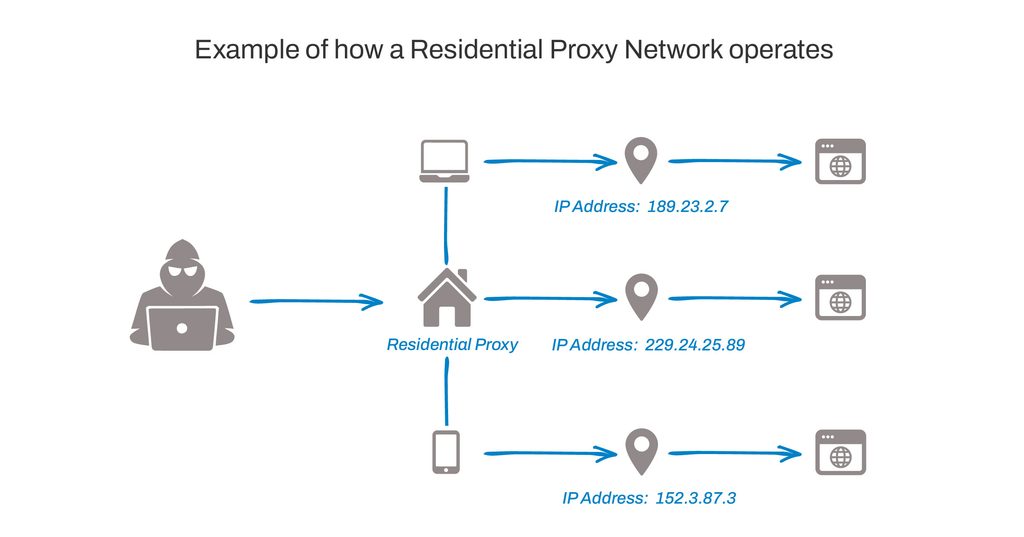
As cybercriminals face tougher online defenses, they increasingly hijack home internet connections through something called “residential proxy networks.” Hackers use residential proxy networks to mask malicious activity behind trusted home IP addresses. How? A major entry point for these attacks is pirated streaming media hardware, most notably black box devices and similar Android-based TV boxes.
The hook? Users gain free access to paid streaming apps, eliminating monthly subscription bills.
These black boxes funnel millions of home Internet connections into a unified network, acting as a middleman in your home. The middleman, or proxy operator, lets malicious traffic flow through your home network for a fee. Home users have no idea their connections are being used to facilitate crimes and, occasionally, even nation-state attacks. The online services see only IP addresses with good reputations and geolocations that don’t stand out.
Users who know these digital media players piggyback on their connections often don’t care. In exchange for leasing out part of their unlimited bandwidth to others, many get free movie and TV show streaming. Users who understand the Trojan horse find that the tangible benefits outweigh the abstract harm.
Research by Plume, a tech security firm that works closely with Internet Service Providers, cataloged a vast ecosystem of malware that preys squarely on one type of black box streaming device. However, many media players that offer pirated content pose the same threat.
“Our researchers found that these residential proxy networks are not simply monetization tools,” Plume researchers wrote. “They are actively being used as a target for additional malware delivery, enabling cybercriminals to infect already-compromised devices with entirely new malware families while remaining largely invisible to the device owner.”
One Android-based black box is configured with almost all the OS-based security protections turned off. Preinstalled apps on the device, or those available through the black box’s app store, then run as root, giving them unfettered administrative system rights on the device. Paying proxynet customers can also gain root by issuing a handful of Linux commands. With that, either the app or the paying customer can install their own apps, surveil, and join the local network the device is connected to, where they have the same system rights as any other connected device.
To make matters worse, the device has its “master key” left completely unguarded. Normally, if a user or program wants master administrative control over a system, it has to ask for permission and prove who it is (like typing in an admin password). On this device, that control valve is wide open; it grants total administrative power (root access) to anyone or anything that asks for it, no password or permission required.
Most users of these black-box devices place them behind their router. That sense of security is a complete illusion. Normally, your home router acts like a security guard that keeps uninvited visitors from entering your network. However, black-box devices bypass this guard with a simple trick: they reach out from the inside first.
- The Secret Backdoor: Software inside the black box makes an outbound call to a remote hacker server and keeps the line open continuously.
- Sneaking Past the Router: Because the connection starts inside your home and is scramble-coded (encrypted), your router assumes it is safe and lets it pass through.
- Hidden from View: Even tech-savvy homeowners won’t see suspicious incoming traffic on their network monitors because the hacker uses that pre-opened line as a secret, invisible tunnel back into your device.
While consumers often trade bandwidth for free TV and movie streaming, new research from security firm Plume reveals that these streaming devices pose a severe threat:
- Stripped-Down Security: Black Box devices offering FREE TV ship with core Android security features disabled and come preloaded with unauthenticated root privileges, leaving their Android Debug Bridge (ADB) ports fully exposed.
- Bypassing Home Routers: By establishing persistent, encrypted outbound connections to external proxy servers, these devices bypass home router firewalls, preventing homeowners from noticing unauthorized inbound connections.
- Gateway for Additional Malware: Cybercriminals and paying proxy customers use these open backdoors to silently install additional malware families—such as Mirai botnet variants, CECbot, and Maskify—turning home devices into tools for DDoS attacks and cybercrime.
- Local Network Exposure: Attackers can bypass internal IP-blocking mechanisms to scan and access other devices on the same home Wi-Fi network (computers, phones, smart devices).
The Takeaway:
Because these devices undermine home network defenses, security experts urge users to disconnect and discard pirated streaming boxes immediately.